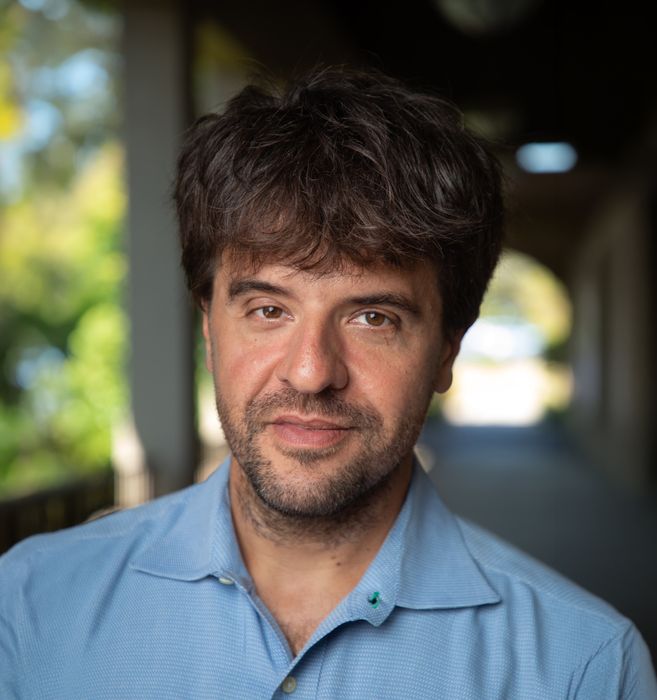
Neuroscientist · Psychiatrist · Author
From light to life.
Dr. Karl Deisseroth’s work has fundamentally reshaped biology. He has enabled exploration of how cellular activity gives rise to the behavior of living organisms — extending even to the complex perceptions, cognitions, and emotions controlled by the brain. Follow a two-decade trajectory of discovery, from pioneering the control of individual brain cells with light to a new era of medical application in rapidly advancing clinical trials.
2004–2009
Precise control from microbes: capturing the spark of light
Deisseroth introduces a gene from microbial algae (encoding a light-sensitive ion channel) into mammalian brain cells on July 1, 2004. In this experiment, he proves that neurons can safely express this exotic algal protein and become directly activated by light.
In 2005, Deisseroth’s lab publishes a paper showing this approach allows millisecond-precision optical control of neural spikes, fast enough to keep pace with the natural rhythms of brain function and behavior. Over the next few years, his teams assemble and demonstrate the rest of the optical and genetic pieces needed for the new approach (optogenetics).
2008–2023
Atomic architecture: illuminating a new way to channel electricity
Illuminating and redesigning a biological way to channel electricity, Deisseroth’s team maps the structure and function of the major types of these light-sensitive channels (called channelrhodopsins) down to the positions and actions of individual atoms, discovering structural principles and creating blueprints to design advanced, custom molecular tools for optogenetics.
2010–2026
Clinical translation: kindling the flame of a new approach
Decades of discovery culminate in human medicine guided by Deisseroth’s teams, with optogenetics-guided medication strategies reporting two Phase 2 clinical trial results in 2026 – both leading to Phase 3 exploration and new hope for schizophrenia, autism, and cognitive disorders.
From light to life.
This detailed timeline includes select career achievements, papers, awards, and press features. For a full list of academic papers, please visit Google Scholar.
Clinical Translation Career

Decoding brain circuits to understand the human mind Press

Asan Award Award

How does the brain turn an experience into an emotion? Press

The heart plays a hidden role in our mental health Press


Louisa Gross Horwitz Prize Award

Depression, schizophrenia, and the brain Press

Optogenetics with Dr. Karl Deisseroth Press

Published Projections Career

Light-activated molecules, windows into the mind Press
Lasker Award Award

2021 Lasker Awards honor neuroscience researchers, a biomedical legend and mRNA vaccine pioneers Press

Projections: A Story of Human Emotions Press
Karl Deisseroth discusses Projections with Catherine Dulac Press
Projections review: psychiatry in extremis Press

Connections by Karl Deisseroth review – artful insights into the brain Press

Neuroscientist Karl Deisseroth: ‘Coronavirus has changed us all’ Press
Scientists say a mind-bending rhythm in the brain can act like ketamine Press
Heineken Prize Award

National Academy of Engineering Career

National Academy of Engineering Award
New ways to image and control nerve cells could unlock brain mysteries Press
Why are these mice hallucinating? Scientists are in their heads Press

Founder and advisory board member, MapLight Therapeutics Career

Stanford pioneer in brain research wins prestigious Kyoto Prize Press

Kyoto Prize Award
- Rumford Prize, AAAS
- Eisenberg Prize, University of Michigan
- Leibinger Prize
- Elected to the National Academy of Inventors

Else Kröner Fresenius Prize Award
- Harvey Prize in Human Health, Technion
- NOMIS Foundation Distinguished Scientist Award
- Redelsheimer Award

Building a see-through brain Press

Massry Prize Award
- BBVA Foundation Frontiers of Knowledge Award
- McGovern Award in Science
- Elected to the American Institute for Medical and Biological Engineering

Gambling rats reveal nerve cells which may control risk-taking behaviour Press
iBiology short Talk: development of optogenetics Press

Stanford, Harvard scientists to share $500,000 prize for work on new research technologies Press

Albany Med Prize awarded to scientists from Harvard, Stanford Press

Breakthrough Prize Award
- Albany Medical Center Prize in Medicine and Biomedical Research
- Lurie Prize in Biomedical Sciences
- Dickson Prize in Medicine
- Adolph Meyer Award, American Psychiatric Association

This is the brain circuit that makes you shy Press

Brain control in a flash of light Press
Investigator, HHMI Career

Dickson Prize in Science Award
- Keio Medical Science Prize
- Wilson Prize, Harvard Chemistry
- Elected to the German National Academy of Sciences (Leopoldina)
- Scientist of the Year, R&D Magazine

Karl Deisseroth: optical deconstruction of biological systems Press

Researchers build new off switch to shut down neural activity Press
Neuroscience: method man Press

CLARITY makes it perfectly clear Press

Organs made transparent with new imaging technique Press

See-through brains promise to clear up mental mysteries Press

Blockheads no more: new technology creates the see-through brain Press
Foreign Adjunct Professor, Karolinska Career

CLARITY of insight Career
- Gradinaru V, Treweek J, Overton K & Deisseroth K (2018). Hydrogel-tissue chemistry: principles and applications. Annual Review of Biophysics 47:355-76.
- Wang X, Allen WE, Wright MA, Sylwestrak EL, Samusik N, Vesuna S, Evans K, Liu C, Ramakrishnan C, Liu J, Nolan GP, Bava F & Deisseroth K (2018). Three-dimensional intact-tissue sequencing of single-cell transcriptional states. Science 361(6400):eaat5691.

The BRAIN Prize Award
- Richard Lounsbery Award, National Academy of Sciences
- Pasarow Foundation Award in Neuropsychiatry
- Goldman-Rakic Award, Yale/NARSAD
- Gabbay Award, Brandeis University
- Premio Città di Firenze for Molecular Sciences

Professor and endowed chair Career
View profile- Professor of Bioengineering and Psychiatry, Stanford
- D.H. Chen Professor of Bioengineering and of Psychiatry and Behavioral Sciences

National Academy of Sciences Career

National Academy of Sciences Award
- Zülch Prize, Max Planck Society
- Perl-UNC Neuroscience Prize
- Record Prize, Baylor College of Medicine
Anxiety switch makes mice shy no more Press
Scientists discover anti-anxiety circuit in brain region considered the seat of fear Press

Alden Spencer Prize Award

National Academy of Medicine Career

Method of the year 2010 Press
Optogenetics: controlling the brain with light (extended version) Press
Karl Deisseroth: Using optogenetics to reveal the circuitry of depression in the brain Press

Optogenetics: Researchers shed light on neuron function Press

Optogenetics illuminates brain function Press

Pioneering bioengineering education Career
National Academy of Medicine Award
- Nakasone Prize, Human Frontier Science Program
- Koetser Prize, Zurich
- Gill Young Investigator Award, Indiana University
- Alden Spencer Prize, Columbia University, for optogenetics
Illuminating depression Press
Associate professor Career
View profile- Associate Professor of Bioengineering and Psychiatry, Stanford
- HHMI Early Career Investigator, through 2013
- NARSAD Council, Brain & Behavior Research Foundation
Society for Neuroscience Young Investigator Award Award
Light activated Press
Teaching optogenetics Career
- Taught optogenetics methods at Woods Hole and Cold Spring Harbor
- Free Stanford optogenetics workshops for visiting scientists from around the world (through the present)
Lawrence C. Katz Prize Award
- William M. Keck Foundation Medical Research Award
- Schuetze Prize, Columbia University
- World Economic Forum Lecturer, Davos

The beam of light that flips a switch that turns on the brain Press
10 breakthrough technologies 2007 Press

National Advisory & Parkinson’s service Career
Visit the site- Member, NIH Molecular Neurogenetics study section, through 2009
- Ad hoc member, NIH study sections
- Scientific advisor, Kinetics Foundation for Parkinson’s Research
McKnight Scholar Award Award
- Top 10 Technologies, MIT Technology Review

Board certified Career

Presidential Early Career Award Award

NIH Director’s Pioneer Award Award
- Klingenstein Fellowship and Robert H. Ebert Clinical Scholar Award
- McKnight Technological Innovations in Neuroscience Award
- NARSAD Young Investigator Award
- Whitehall Foundation Award
- Coulter Foundation Early Career Translational Research Award
- APIRE Young Faculty Award
Discovering causality Career

The Deisseroth Lab opens Career
Visit the site- Deisseroth lab spaces open in spring 2004 (Clark Center at Stanford)
- Principal investigator and clinical educator, from 2004
- Attending physician, inpatient and outpatient psychiatry, from 2004
- Assistant Professor of Bioengineering and Psychiatry, Stanford
- Scientific advisor, Michael J. Fox Foundation for Parkinson’s Research
APA Resident Research Award Award
- Charles E. Culpeper Scholarship in Medical Science Award


Clinical training at Stanford Career
Visit the site- MD internship and licensure, Stanford, through 2001
- Psychiatry residency, Stanford, through 2004
Yanofsky Graduate Research Award Award
Biochemical sciences at Harvard Career

Phi Beta Kappa Award
- Highest Honors, Department of Biochemistry and Molecular Biology, Harvard
- John Harvard Scholarship for Academic Achievement of the Highest Distinction

Optogenetics: controlling the brain with light. Precise control from microbes
Multimodal fast optical interrogation of neural circuitry. Precise control from microbes
Millisecond-timescale, genetically targeted optical control of neural activity. Precise control from microbes
An optical neural interface. Precise control from microbes
Neural substrates of awakening probed with optogenetic control of hypocretin neurons. Precise control from microbes
Optical deconstruction of Parkinsonian neural circuitry. Precise control from microbes
Parvalbumin interneurons and gamma oscillations synergistically enhance cortical circuit performance. Precise control from microbes
Activation of fast-spiking neurons induces gamma oscillations and shapes sensory transmission. Precise control from microbes
Phasic firing in dopamine neurons is sufficient for behavioral conditioning. Precise control from microbes
Red-shifted optogenetic excitation: a tool for fast neural control derived from Volvox carteri. Atomic architecture
Bi-stable neural state switches. Atomic architecture
Ultrafast optogenetic control. Atomic architecture
Two-photon optogenetic toolbox for fast inhibition, excitation, and bistable modulation. Atomic architecture
Crystal structure of the channelrhodopsin light-gated cation channel. Atomic architecture
Color-tuned channelrhodopsins for multiwavelength optogenetics. Atomic architecture
Structure-guided transformation of channelrhodopsin into a light-activated chloride channel. Atomic architecture
Structural foundations of optogenetics: determinants of channelrhodopsin ion selectivity. Atomic architecture
The form and function of channelrhodopsin. Atomic architecture
Crystal structure of a natural anion-conducting channelrhodopsin. Atomic architecture
Structural mechanisms of selectivity and high-speed gating in anion channelrhodopsins. Atomic architecture
Cortical layer-specific critical dynamics triggering perception. Atomic architecture
From microbial membrane proteins to the mysteries of emotion. Atomic architecture
Structural basis for channel conduction in the pump-like channelrhodopsin ChRmine. Atomic architecture
Structural basis for ion selectivity in K+-selective channelrhodopsins. Atomic architecture
All-optical physiology resolves a synaptic basis for behavioral time scale plasticity. Atomic architecture
Genetic reactivation of cone photoreceptors restores visual responses in retinitis pigmentosa. Clinical translation
Neocortical excitation-inhibition balance in information processing and social dysfunction. Clinical translation
Optogenetics and psychiatry. Clinical translation
Assembling behavioral states: divergent neural pathways recruit separable anxiety features. Clinical translation
Circuit dynamics of adaptive and maladaptive behavior. Clinical translation
Natural neural projection dynamics underlying social behavior modulation. Clinical translation
Optogenetics: ten years of microbial opsins in neuroscience. Clinical translation
Targeting neural circuits. Clinical translation
Modulation of prefrontal cortex excitation-inhibition rescues social behavior in CNTNAP2-deficient mice. Clinical translation
5-HT release in accumbens rescues social deficits in mouse autism model. Clinical translation
Interacting neural ensembles in orbitofrontal cortex for social and feeding behavior. Clinical translation
Cardiogenic control of affective behavioral state. Clinical translation
Roadmap for direct and indirect translation of optogenetics into discoveries and therapies for humans. Clinical translation
No matching results.
View all publications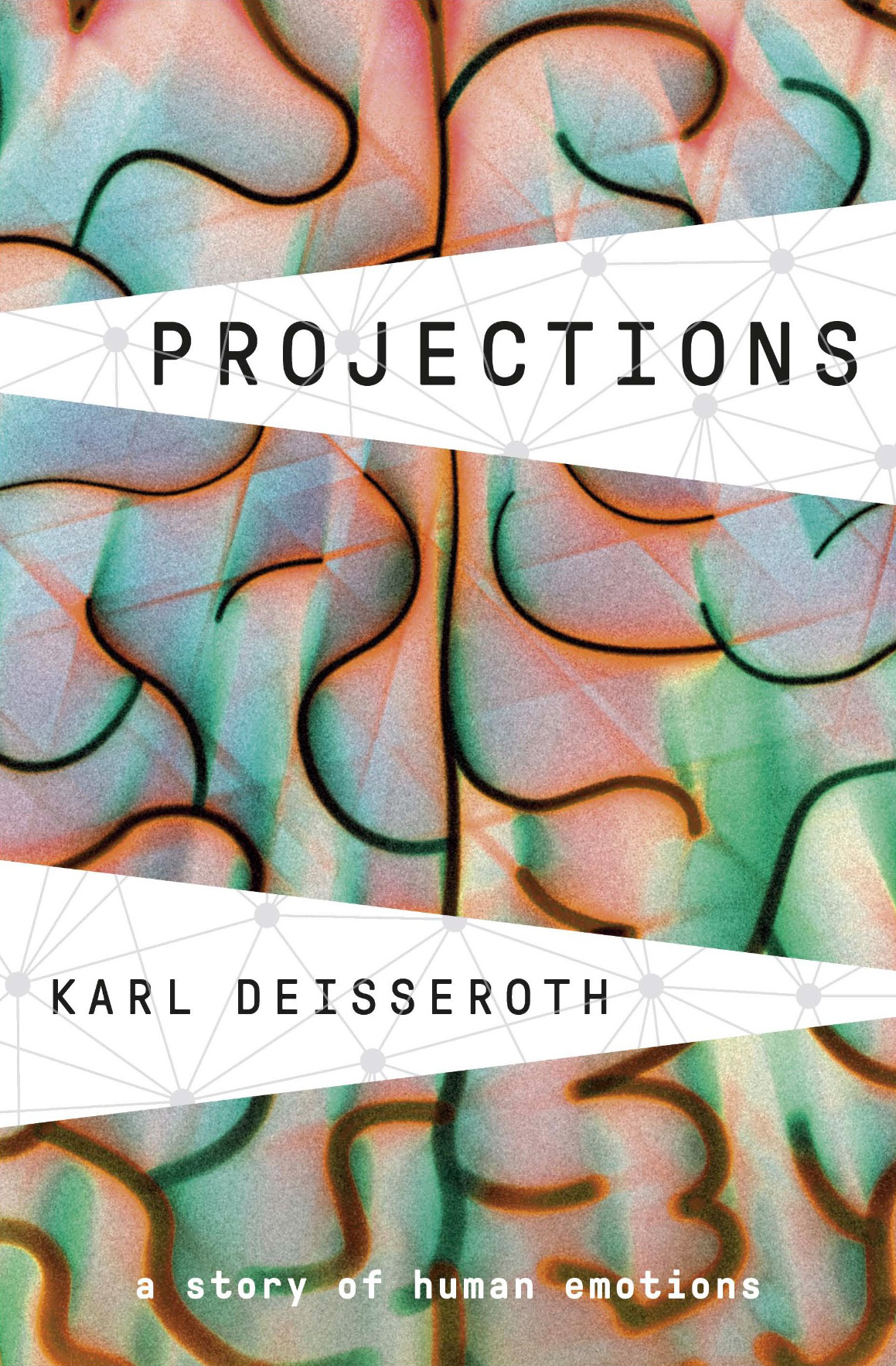
The book
Projections
A story of human emotions
A literary tour of the human mind, told through the clinical stories of Karl’s years as an attending psychiatrist. Projections bridges the deep empathy of psychiatric practice with the structural rigor of the laboratory, exploring the brain as a physical system of circuits that can be mapped, understood, and treated. Translated into more than 15 languages worldwide.
★★★★★
“A scintillating and moving analysis of the human brain and emotions.”Nature
Karl Deisseroth.
A neuroscientist, clinical psychiatrist, and author, Karl Deisseroth is the D.H. Chen Professor of Bioengineering and of Psychiatry and Behavioral Sciences at Stanford University, and an Investigator of the Howard Hughes Medical Institute. His lab pioneered optogenetics and developed hydrogel-tissue chemistry, starting with CLARITY, using this dual methodology to map the specific cell types and connections driving complex behavior. To accelerate global progress in biological discovery and treating psychiatric conditions, the lab has shared these breakthrough techniques with thousands of research facilities worldwide.
Guided by a love for the beauty of small things in nature and a desire to understand how large patterns emerge, Deisseroth has forged new physical frameworks for deconstructing the mysteries of brain function in both health and neuropsychiatric disease. His path to science began in high school with an interest in thoughts, emotions, and consciousness. As an undergraduate, he initially considered majoring in literature, but became captivated by the beauty of chemistry and the structural biology of proteins.
Deisseroth was initially drawn to psychiatry by encountering a patient on the schizophrenia spectrum, and he continues to treat patients with challenging neuropsychiatric disorders. But the translational journey for his science began with his exploration of the inner workings of microbial light-activated channels. Today, more than 10,000 papers have been published reporting on discoveries made with optogenetics. Work is being carried out on direct clinical optogenetics, initially for human blindness – an effort which Deisseroth helped advance as far back as 2010 (Busskamp et al., Science 2010) and which led to demonstrated success in 2021 (Sahel et al., Nature Medicine 2021).
Believing that indirect optogenetics – new medicine development grounded in causal neural circuit discovery – could have an even greater opportunity, Deisseroth and his team members also founded MapLight Therapeutics in 2018.
The first two candidate medications in MapLight’s pipeline have completed Phase 2 clinical trials with results supporting advancement to Phase 3, including for schizophrenia – bringing the work full circle back to Deisseroth’s initial clinical inspiration.
See recent coverage in the press, browse selected publications, or get in touch.